How to assess the value of a diamond: the complete guide
If you would like to estimate the value of a diamond with a view to reselling it or for insurance purposes, below is a complete guide to understanding how the value of a diamond is estimated. This guide explains the important factors to take into account.
White diamonds are classified according to standardised quality criteria, which allows expert gemmologists to compare their value objectively when appraising a diamond.
There is a price reference for certified diamonds called the “Rapaport Diamond Report” (available to professionals only). It follows market trends and publishes reference prices per carat according to the four criteria: weight (carat), colour, cut and clarity. Certain discounts or premiums must also be applied on resale depending on market trends.
The law of the market
Indeed, any theoretical price (price list, guide) must be adjusted according to supply and demand. Some diamond cuts are more sought after than others. For example, antique cuts are in lower demand than today’s “brilliant” cuts. The rough stones of these antique cuts often came from the Cape mines (South Africa). They have a yellowish sparkle, less desirable by today’s standards. As a result, they are priced lower (discounted) than a modern-cut diamond of colour F or H (extra white). Finally, diamonds under 0.50 carat (1/2 carat) are difficult to trade as individual stones. This is due to the structure of the market, as these stones are bought in lots by dealers.
Knowing the value of a diamond
Knowing the financial value of a diamond requires a meticulous and precise appraisal of the 4 Cs: Clarity, Colour, Cut and Carat.
Diamond clarity – Clarity
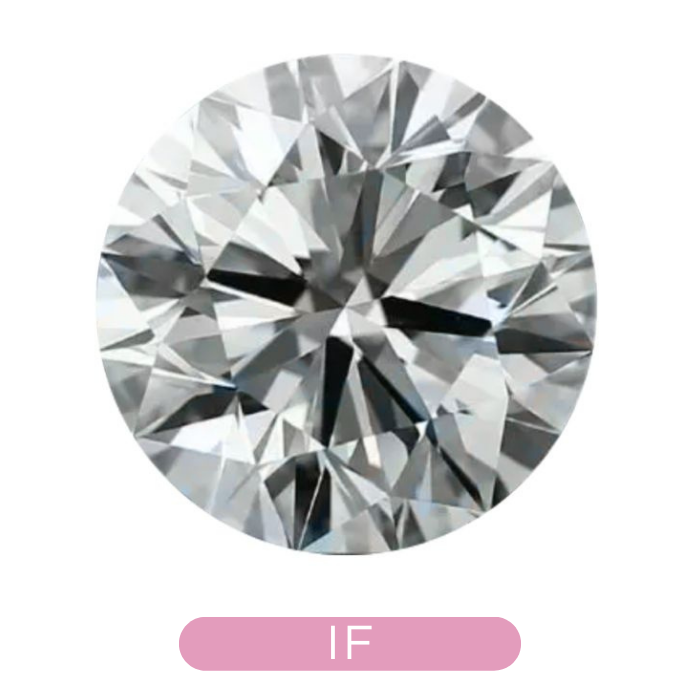
Diamond clarity is graded according to how visible its characteristics are under 10x magnification. A stone is graded flawless if, under this magnification, no inclusion (internal flaw) and no blemish (external flaw) is visible. Diamonds are classified into 5 main clarity categories according to the presence and number of internal flaws called inclusions.

IF diamonds are flawless under a loupe (x10)
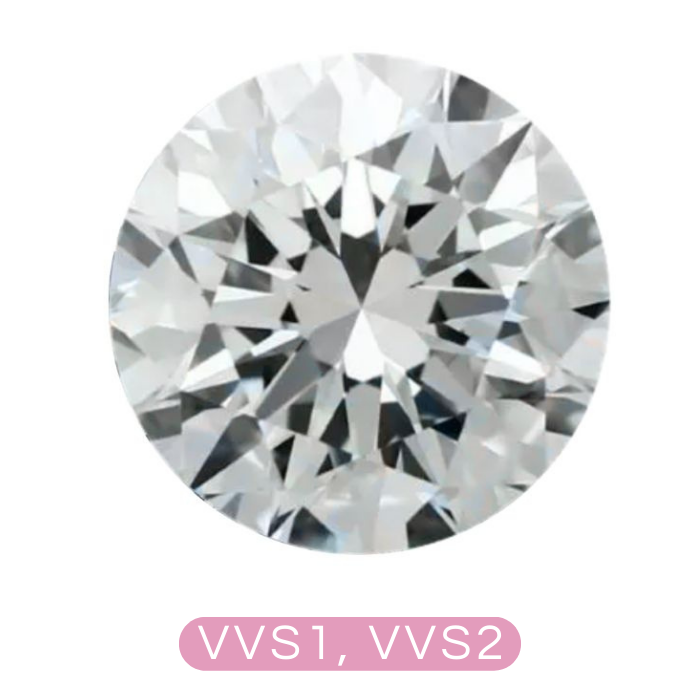
VVS diamonds (1 and 2) contain very, very small inclusions
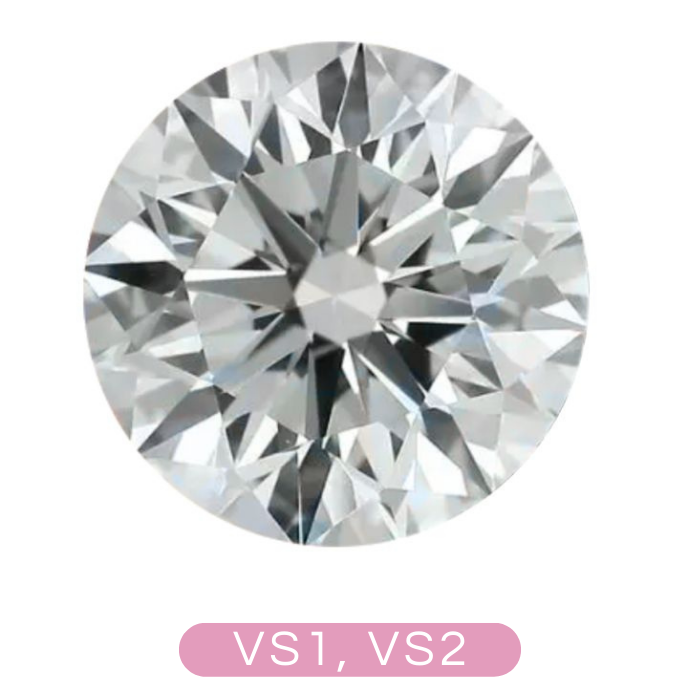
VS diamonds (1 and 2) contain very small inclusions
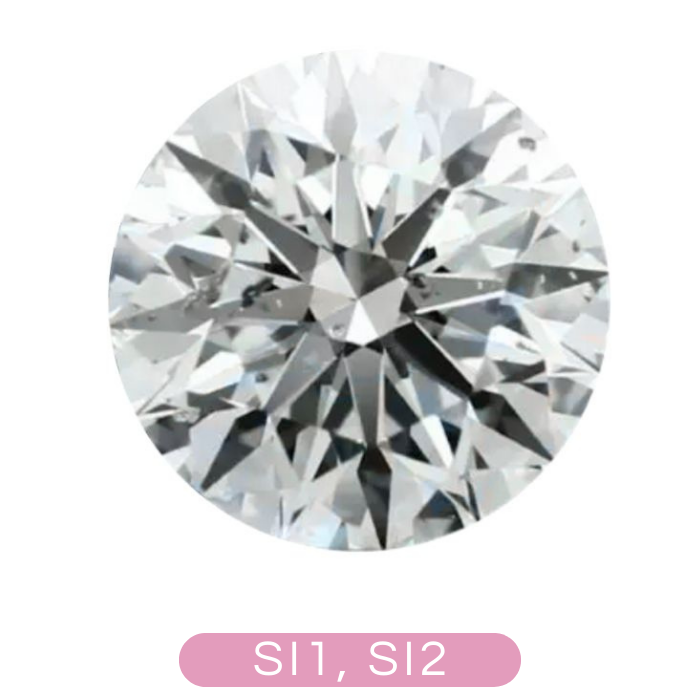
SI diamonds (1 and 2) contain small inclusions
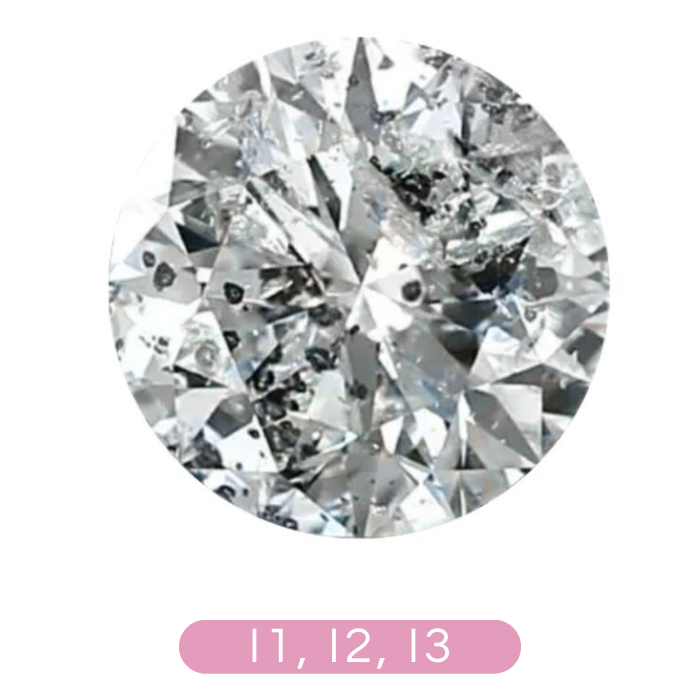
I diamonds (1, 2 and 3) contain inclusions visible to the naked eye
Diamond colour – Color
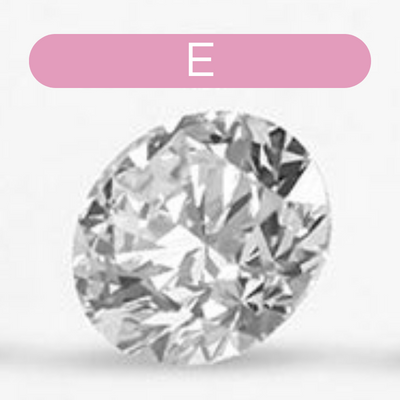
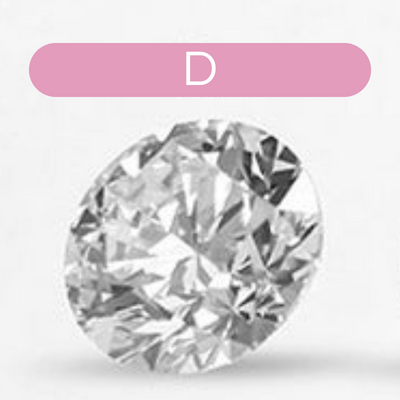
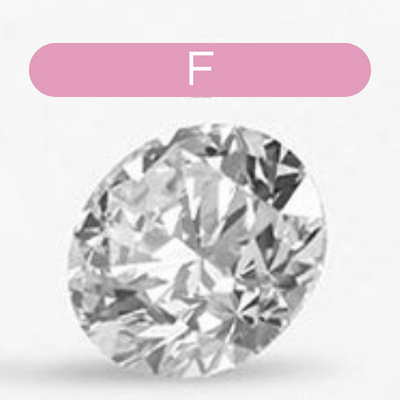
Colour refers to the natural tint inherent in diamonds. In nature, most diamonds have a slight yellow tint. The closer a diamond is to colourless (like water – hence the expression “the water of a diamond”), the rarer it is. The standard for colour grading is to compare each stone with a reference set and assign it a grade from “D” (colourless) to “Z” (light yellow).

Exceptional white +

Exceptional white
Rare white +
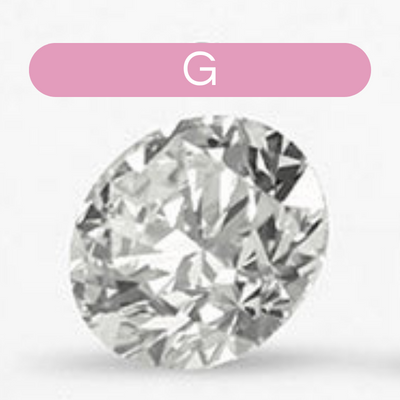
Rare white
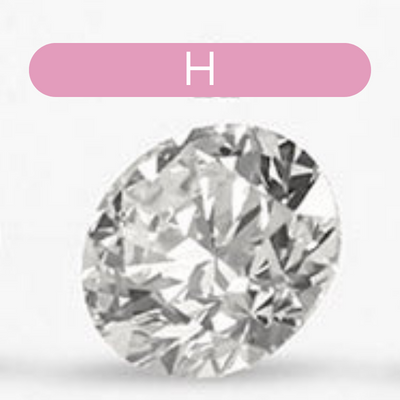
White
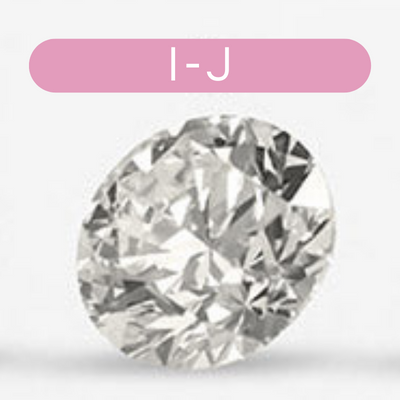
Slightly tinted white
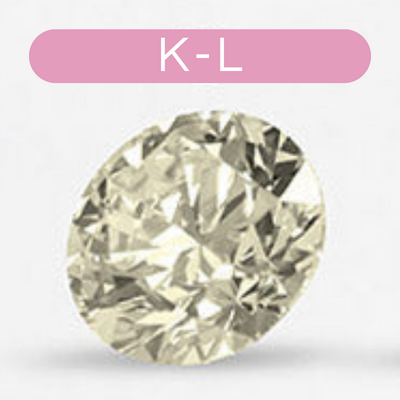
Tinted white
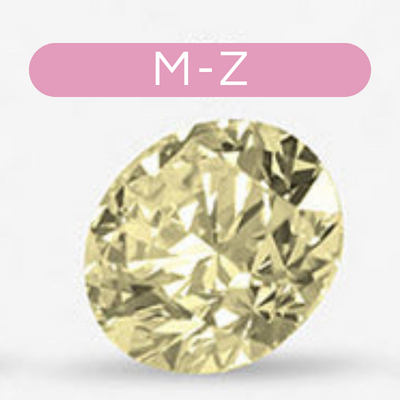
Tinted
Diamond cut - Cut
The cut (that is, the geometric shaping) is certainly the most important of the 4Cs. It refers to how a diamond’s facets interact with light, and is determined by symmetry, proportion and polish. More than any other factor, the cut determines the beauty of the stone.

Brilliant
The brilliant, also called round brilliant, is the most popular cut. It is perfectly symmetrical thanks to its round shape, which lets it reflect light ideally from one facet to another and achieve the brilliance and fire so typical of round diamonds. This shape has 57 facets.

Princess
The princess diamond is a very popular cut. Its square geometric shape gives it a modern, contemporary style, and it has a great deal of brilliance and fire. This shape has between 50 and 58 facets.

Emerald
The emerald cut is inspired by the cut of the green gemstone of the same name. This distinctive shape, with its cut corners and spacious table, gives the stone remarkable clarity. This shape has 57 facets.
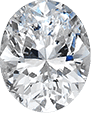
Oval
The oval shape was introduced in the 1960s by Lazare Kaplan, a cousin of Marcel Tolkowsky, who in 1919 devised a mathematical formula for cutting diamonds with precise proportions and angles to maximise the reflection and refraction of light. An oval diamond offers as much brilliance and sparkle as traditional round diamonds. This shape has 55 facets.

Marquise
The marquise diamond, also called navette, takes its name from the Marquise de Pompadour: in the 18th century, King Louis XV of France had a diamond cut to resemble his mistress’s lips. This shape has 55 facets.
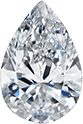
Pear
The pear diamond combines a round and a marquise diamond: rounded on one side and pointed on the other, it is shaped like a drop of water or a tear. This shape usually has 56 facets.

Asscher
The Asscher diamond takes its name from the family of the same name, who were entrusted by the British royal family, at the beginning of the last century, with cutting the Cullinan (the largest diamond in the world). The Asscher cut is similar to the emerald cut, with a few variations. This shape has 74 facets.

Radiant
The radiant diamond combines 2 styles: the brilliant cut and the step cut (as in the emerald cut). It is a hybrid shape that combines the elegance of the emerald cut with the sparkle of the round brilliant. This shape has 70 facets.

Heart
The heart diamond has existed since the 16th century. In 1562, Mary Queen of Scots gave Queen Elizabeth a ring set with a heart diamond as a token of friendship. A heart cut has between 56 and 60 facets

Cushion
The cushion diamond has existed for more than 200 years. More recently, this cut has been modified and modernised. A cushion diamond can be square or rectangular and usually has a lot of fire but slightly less brilliance than a round brilliant. This shape has 58 to 64 facets.
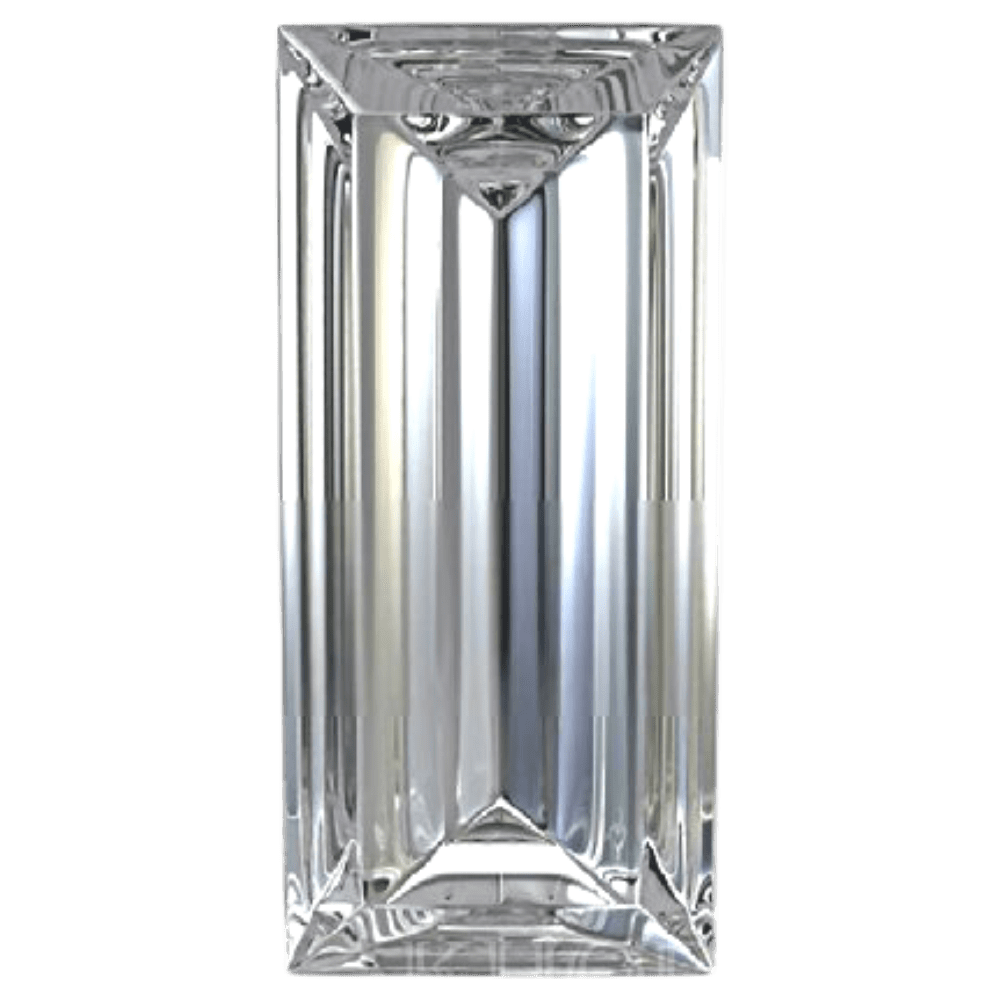
Baguette
The baguette diamond has existed for centuries and was often used in royal jewellery. This lesser-known cut emphasises the diamond’s clarity rather than its sparkle. This shape has 14 facets.
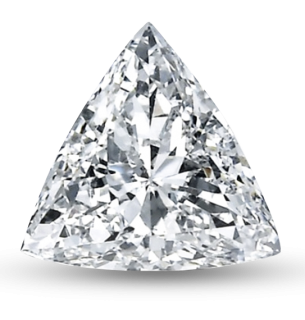
Trillion
The trillion diamond, sometimes called trilliant, trillian or Trielle, is a triangular gemstone cut introduced by the Asscher family in the early 1960s. It has many variations and can have curved or straight sides. It is not very popular. This shape has 31 to 50 facets.
Diamond weight – Carat
Although widely used when buying and searching for the ideal diamond, the carat (ct) is often confused with size. In fact, the carat refers to the weight of gemstones and diamonds (1 carat equals 0.2 gram). Nor should it be confused with the carat (karat) used to indicate the purity of gold.
The word “carat” is said to come from the seed of the carob tree, or “Kuara”. This seed had the particularity of keeping the same weight over time. It was used as a unit of measurement by merchants in the gold trade, notably in Africa and then in India. The carat entered the metric system in 1906 at the General Conference on Weights and Measures in Paris.
The shape and type of gemstone display their weight differently, because of each stone’s different density. Diamonds of the same carat weight can have different prices because of the impact of the other “Cs”.
0.50 CT
(5,2 mm)

0.75 CT
(5,9 mm)

1.00 CT
(6,5 mm)

1.25 CT
(7,0 mm)

1.50 CT
(7,4 mm)

1.75 CT
(7,8 mm)

2.25 CT
(8,6 mm)

2.50 CT
(9,0 mm)

3.00 CT
(9,3 mm)

4.00 CT
(10,2 mm)